

Dirt, stains, mold, and weather marks can make a clean home look neglected. Garage doors often collect these problems because they face the weather every day. Learning how to clean garage doors properly can restore their appearance without harming the finish. The wrong cleaner or rough tool can damage paint and leave marks that are hard to repair.
A safe cleaning job starts before water touches the door. You need the right cleaner, tools, washing method, and drying routine for the door material. Steel, aluminum, and wood each need different care. This guide explains how to prepare, wash, remove stains, protect the surface, and maintain a cleaner garage door for longer.
Why Routine Garage Door Cleaning Protects Your Investment
Garage doors do more than improve the front of a property. They protect the garage while facing rain, dust, sunlight, and changing temperatures. Dirt that stays on the surface for long periods can make the finish look dull. Moisture trapped around dirty areas may also contribute to stains and surface wear. Regular preventive garage door maintenance keeps the surface cleaner while supporting better long-term garage door care.
A homeowner near a busy road may notice a gray film building up on the door every few weeks. Washing it early takes little effort. Waiting for months can make the buildup harder to remove. Regular garage door maintenance keeps the surface cleaner while supporting better long-term garage door care.
Quick Answers Before You Start Cleaning Garage Doors
Most garage doors benefit from cleaning a few times each year. Doors exposed to heavy dust, rain, trees, or road grime may need attention more often. A mild cleaner and soft brush are usually safer than strong chemicals or rough tools.
Pressure washing is not the first choice for most garage doors. High water pressure can damage paint, force water into seals, or affect delicate areas. For routine garage door cleaning, a garden hose and a soft brush are often enough. Wax may also help some finishes, but the product should match the door material.
Prepare Your Garage Door Before Washing Begins
Preparation can prevent many cleaning problems. Water and cleaning products are easier to control when the work area is clear. Taking a few minutes before washing also helps protect people, vehicles, electrical parts, and nearby surfaces.
A homeowner who starts washing without moving a parked car may end up dealing with water spots on the vehicle. Another common problem is leaving loose dirt on the door and rubbing it into the paint. A simple preparation routine makes the entire job safer and cleaner.
Preparation Checklist
- Disconnect the automatic opener if necessary.
- Close the garage door completely.
- Remove loose dirt with a soft brush.
- Move nearby vehicles and furniture.
- Cover exposed electrical outlets.
- Check the surrounding ground for slippery areas.
Safety Precautions
- Wear protective gloves.
- Use eye protection when needed.
- Avoid standing on wet or slippery surfaces.
- Use only a stable ladder.
- Test unfamiliar cleaning products on a small, hidden area.
- Keep children and pets away from the work area.
These steps support better garage door care before washing begins. They also reduce the chance of spreading dirt or exposing sensitive parts to unnecessary moisture.
Different Garage Door Types Need Different Cleaning Care
The door material changes how it should be cleaned. Steel doors can usually handle regular washing with mild products. For example, a steel garage door may only need soap and water after a dusty week. A wooden door may need faster drying and closer inspection after rain. Knowing whether you need to clean aluminum garage doors, clean steel garage doors, or clean wooden garage doors helps prevent damage before it happens. Proper garage door maintenance also helps preserve the door’s finish and condition.
A wooden door may need faster drying and closer inspection after rain. Knowing whether you need to clean aluminum garage doors, clean steel garage doors, or clean wooden garage doors helps prevent damage before it happens. Painted surfaces also deserve special care. A strong cleaner may remove dirt but also weaken the finish. When unsure, follow the door manufacturer’s cleaning instructions and test a small area first.

Cleaning Products That Deliver Better Results Every Time
The cleaner you choose can affect the final condition of the door. Mild products are often enough for normal dirt and dust. Strong chemicals should not be used simply because a stain looks difficult. A homeowner may see a dark mark and reach for a heavy degreaser. That can create a faded patch if the product is not suitable for the finish. Safe cleaning means choosing a product based on the stain and door material rather than using the strongest option available.
Best Cleaner For Garage Doors
A mild dish soap mixed with water is a practical option for many painted garage doors. A pH-neutral cleaner can also work well when the surface needs more careful treatment.
Always check the product label before use. Apply the cleaner to a small hidden section first. If the finish changes color or texture, stop using that product.
Products To Avoid During Cleaning
Avoid strong solvents, abrasive powders, and cleaners that can damage painted finishes. Wire brushes can also leave scratches that become visible after the surface dries. Bleach and other strong chemicals should not be used without confirming that they are safe for the specific door material. More cleaning power does not always mean a better result.
Eco-Friendly Cleaning Solutions
Simple household solutions can handle many light cleaning jobs. Mild soap and water are often enough for dust and everyday grime. A diluted vinegar solution may help with some mineral marks when the door material allows it. Always test homemade solutions first. “Natural” does not automatically mean safe for every finish. The surface still determines which cleaner is suitable.
Choosing Products For Different Door Materials
Steel, aluminum, and wood may react differently to cleaning products. Painted steel usually needs a mild approach. Aluminum may require extra care around coatings. Wood needs controlled moisture and prompt drying.
If the door has a special finish, check the manufacturer’s care instructions before choosing garage door cleaning products. This small step can prevent an otherwise avoidable surface problem.
Gather The Right Materials And Cleaning Tools First
The right tools make the work easier and reduce the chance of scratches. Most homeowners do not need expensive equipment for routine cleaning. A few basic supplies can handle normal dirt and light stains.
Materials
- Mild dish soap
- pH-neutral cleaner
- White vinegar solution
- Baking soda
- Soft sponge
- Microfiber cloth
- Silicone protectant
- Non-abrasive cleaner
Tools
- Garden hose
- Soft-bristle brush
- Bucket
- Extension pole
- Spray bottle
- Soft towel
- Step ladder
- Rubber gloves
A soft brush is useful for larger areas, while a microfiber cloth works well around edges and smaller sections. Keeping these items together also makes the garage door cleaning guide easier to follow from start to finish.
Remove Dirt Stains And Mold Without Surface Damage

Stubborn marks need more care than normal dust. Dirt can often be removed with mild soap and water. Mold and mildew may need a more focused cleaning method. Start with the gentlest option and increase cleaning strength only when the surface allows it. For example, dark spots around the lower panels may come from splashback, while green or black growth may indicate mold. Rubbing both areas with a rough brush can damage the finish. Safe garage door stain removal starts by identifying the mark before choosing a product. If cleaning reveals damaged panels or other structural issues, appropriate garage door repair may be needed.
For example, dark spots around the lower panels may come from splashback, while green or black growth may indicate mold. Rubbing both areas with a rough brush can damage the finish. Safe garage door stain removal starts by identifying the mark before choosing a product.
Remove Dirt From Garage Doors
Begin by rinsing loose dirt with clean water. Apply a mild cleaner with a soft sponge or brush. Work in small areas and avoid pressing hard against the surface. A garage door beside a garden may collect soil after heavy rain. Cleaning the lower panels soon after the buildup appears can prevent stubborn marks from forming.
Handle Garage Door Mold Removal Carefully
Mold often develops where moisture remains for long periods. Clean affected areas with a suitable mild solution and a soft brush. Avoid spreading the growth across clean sections. If mold keeps returning, cleaning alone may not solve the problem. Check nearby gutters, drainage, seals, and areas where water collects. Controlling moisture helps prevent repeated growth.
Treat Stubborn Garage Door Stains
Do not immediately use a harsh chemical on a difficult stain. Test a suitable cleaner on a hidden area first. Let it work for the recommended time before gently wiping the surface. A stain that remains after several safe attempts may need professional attention. Aggressive scrubbing can leave a larger visible mark than the original stain.
Follow These Steps To Wash Garage Doors Properly
The washing order affects both the cleaning result and the condition of the finish. Start by removing loose debris before applying soap. Work from higher areas toward the bottom so dirty water does not run over sections you already cleaned. A homeowner who starts scrubbing a dry dusty door can push grit across the paint. Rinsing first reduces that risk. These simple garage door washing methods also make the cleaning process faster and more controlled.
Rinse Away Loose Dirt Before Washing
Use a garden hose to rinse dust, leaves, and loose soil from the surface. Keep the water pressure moderate and work from the top downward. This first rinse prevents loose grit from being dragged across the finish during scrubbing. Pay attention to the lower panels because they often collect more dirt.
Wash Garage Door Panels From Top To Bottom
Mix a mild cleaner with water according to its instructions. Use a soft sponge or brush to clean one section at a time. Start with the upper panels and move downward. Rinse the sponge often so collected dirt does not scratch the surface. This method works well when you need to wash garage door panels without using aggressive tools.
Scrub Stubborn Areas Carefully
Some marks need extra attention, but avoid pressing hard. Let the cleaner loosen the dirt before making another gentle pass. For example, dried mud around a lower panel may need several light passes. Scrubbing forcefully can damage the finish, especially on painted or coated doors.
Rinse Thoroughly And Dry Completely
Rinse away all remaining cleaning solution with clean water. Soap left on the surface can create streaks or dull the finish after drying. Use a clean microfiber cloth to remove excess water where practical. Wooden doors need particular attention because standing moisture can affect the material.
Inspect The Surface Before Finishing
Walk around the entire door after it dries. Look for missed stains, water marks, damaged paint, or areas where moisture may remain. This final check also gives you a chance to notice worn seals or hardware problems. Cleaning is a useful time to combine garage door maintenance with basic surface inspection.
Use Pressure Washing Only When It Is Truly Appropriate
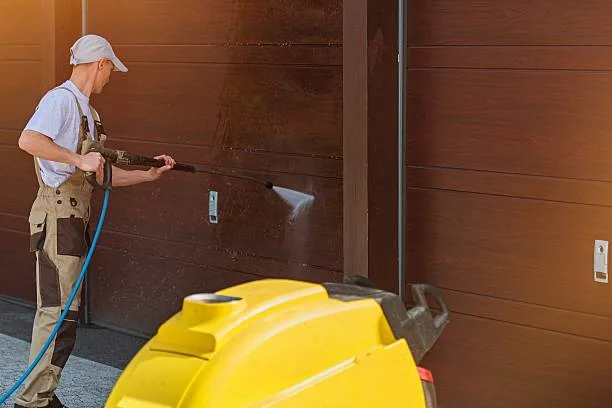
Pressure washing can remove dirt quickly, but high water pressure may cause damage when used incorrectly. It can strip paint, force water into seals, or damage vulnerable finishes. For many residential doors, a garden hose and a soft brush provide safer results.
A homeowner may see a heavily stained door and assume a pressure washer is the fastest answer. However, the extra force can create peeling paint or water intrusion. If pressure washing is considered, use the lowest suitable pressure and keep the nozzle at a safe distance. Wooden doors and older painted surfaces deserve extra caution. When the finish is already weak, pressure washing garage doors may create more repair work than it saves. Professional advice is a better option when the surface condition is uncertain.
Use Pressure Washing Only When It Is Truly Appropriate
Pressure washing can remove heavy dirt quickly, but it is not suitable for every garage door. High water pressure may strip paint, damage seals, force water into joints, or leave marks on softer surfaces. A garden hose with a soft brush is often a safer choice for routine garage door exterior cleaning.
Steel doors with strong factory finishes may handle gentle pressure washing when the manufacturer allows it. Keep the nozzle far from the surface and use low pressure. Avoid direct spraying around seals, windows, hinges, and electrical parts. For most homes, gentle washing methods provide safer results with less risk.
Avoid These Common Garage Door Cleaning Mistakes
Small cleaning mistakes can leave lasting marks on a garage door. Some methods remove dirt fast but damage the finish underneath. Careful cleaning protects the surface and makes future garage door care much easier.
- Using harsh chemical cleaners: Strong chemicals may fade paint or damage protective coatings.
- Scrubbing with wire brushes: Wire can scratch metal and remove surface finishes.
- Washing in direct sunlight: Fast drying can leave streaks and soap marks.
- Ignoring manufacturer recommendations: Different materials need different cleaning methods.
- Forgetting to rinse cleaning solution: Leftover soap can create dull patches.
- Applying too much pressure: Hard scrubbing may damage painted surfaces.
- Skipping mold removal: Mold can return when its source is not cleaned.
- Leaving water on wooden doors: Excess moisture can cause swelling or surface damage.
- Using incorrect cleaners: Some products can react badly with painted finishes.
- Forgetting post-cleaning maintenance: Cleaning alone does not protect hardware or seals.
Protect The Surface After Every Garage Door Cleaning
Cleaning removes built-up dirt and stains from the door. The next step is protecting the surface from weather and daily wear. Simple care after washing can help preserve the finish and reduce future cleaning work. Following practical garage door repair solutions when cleaning exposes damaged hardware, seals, or other components can help prevent minor issues from becoming larger problems.
Apply Protective Wax Where Appropriate
A suitable wax can add a light layer of protection to some painted or metal doors. Always check the door manufacturer’s guidance first. Apply a small amount with a soft cloth and avoid using wax on surfaces that are not designed for it.
Perform Garage Door Maintenance After Cleaning
Once the door is dry, check rollers, hinges, seals, and visible hardware. Cleaning often makes small problems easier to spot. Look for rust, loose parts, cracks, or worn seals. Early garage door maintenance can prevent minor issues from becoming costly repairs.
Inspect Hardware During Final Cleaning
Use the final inspection to look closely at hinges, brackets, rollers, and other visible parts. A homeowner may notice a loose hinge while wiping down the panels. Finding such issues early gives you time to arrange proper repairs before they affect door movement.
Keep Moisture From Damaging The Finish
Dry the door completely after washing, especially around edges and joints. Wooden doors need extra care because trapped moisture can cause swelling or surface damage. Check the bottom seal as well. Good garage door care helps keep water away from areas that need protection.
Create A Cleaning Schedule For Every Garage Door Type
For a garage door to stay clean and attractive, the cleaning routine should match its material. Each surface reacts differently to water, cleaners, and scrubbing. Choosing the right method helps prevent scratches, fading, moisture damage, and early wear.
Steel Garage Doors
Steel doors can handle regular washing with mild soap and water. Use a soft sponge or brush to remove dirt without scratching the paint. Dry the surface after washing to prevent water spots and rust from developing around damaged areas.
Aluminum Garage Doors
Aluminum surfaces are lighter and can scratch more easily than steel. Use a gentle cleaner with a soft cloth or sponge. Avoid harsh chemicals and rough brushes. When you clean aluminum garage doors carefully, the finish can stay bright without unwanted marks.
Wooden Garage Doors
Wood needs extra care because water can enter the surface and cause swelling or finish damage. Use limited moisture and avoid soaking the panels. Dry the door well after cleaning. Check the finish for cracks or peeling areas during each wash.
Painted Garage Doors
Painted surfaces need mild cleaning products that will not strip the finish. Test any new product on a hidden area first. Avoid strong chemicals and aggressive scrubbing. Gentle washing helps preserve the color while removing dust, stains, and outdoor grime.
Keep Your Garage Door Looking New Every Season
A clean garage door looks better and is easier to inspect. Remove loose dirt before it becomes stuck to the finish. Check corners, lower panels, seals, and areas near hinges where grime often collects. Seasonal cleaning also gives homeowners a chance to notice fading, rust, mold, or surface damage early. Use gentle garage door washing methods and dry the surface well after each wash. If an aging door has extensive surface or structural damage and cleaning or repairs are no longer practical, garage door installation can provide a longer-term solution.
Seasonal cleaning also gives homeowners a chance to notice fading, rust, mold, or surface damage early. Use gentle garage door washing methods and dry the surface well after each wash. Consistent garage door care protects the finish and helps the door stay attractive through changing weather.
Final Thoughts On Cleaning Garage Doors Safely
Knowing how to clean garage doors properly helps protect the surface from dirt, stains, mold, and weather damage. Start with gentle products and soft tools. Rinse the door well and dry it fully. Always choose a cleaning method that suits the door material. Every Day Garage Door can help homeowners keep their garage doors clean, protected, and in good condition.
Regular cleaning also supports better garage door maintenance. It helps you spot rust, worn seals, peeling paint, and other problems early. If severe stains, mold, or surface damage remain after careful cleaning, consider professional help for safer and more complete results.
Frequently Asked Questions
A mild mixture of water and dish soap is usually a safe starting point for many garage door surfaces. Use a soft sponge and avoid strong chemicals. Test the solution on a small hidden area first.
Frequent washing does not usually cause damage when gentle products and soft tools are used. Problems can occur with harsh chemicals, rough brushes, or strong pressure. Rinse the surface well and dry it after cleaning.
Remove the mold fully and keep the door dry after washing. Check nearby areas for trapped moisture or poor drainage. Regular cleaning can also help prevent buildup from becoming a recurring problem.
No. Waxing is not needed after every wash. Some painted or metal doors may benefit from occasional protective wax. Always check the manufacturer’s care instructions before applying any product.
Inspect visible hardware during regular cleaning. Look for rust, loose parts, worn rollers, and damaged seals. A closer inspection every few months can help identify problems before they affect door operation.